The Tongass National Forest:
The Natural Wonder That Defines Ketchikan
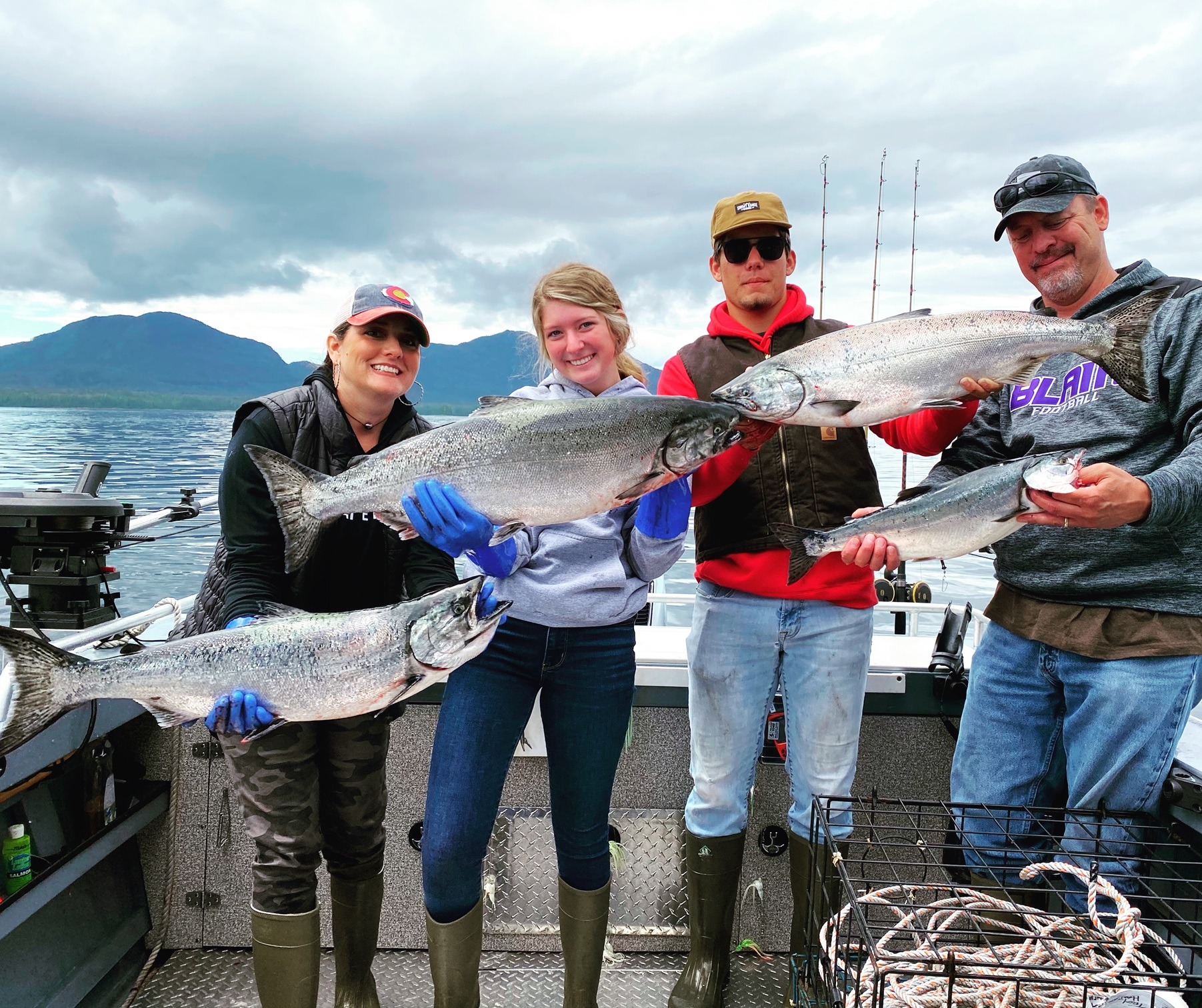
Long before Ketchikan became known as the Salmon Capital of the World, before cruise ships began visiting Southeast Alaska, and before anglers traveled from around the globe in search of trophy salmon, there was the forest.
Towering Sitka spruce and western hemlock stretched across the landscape, rivers carved their way toward the sea, and millions of salmon returned each summer to the streams where they were born. Bald eagles soared overhead, black bears wandered the shoreline, and humpback whales followed schools of baitfish through the protected waters of the Inside Passage.
Today, visitors come to Ketchikan for many different reasons. Some arrive hoping to catch their first wild Alaska salmon. Others want to experience the breathtaking scenery they’ve seen in photographs or watch whales surface against a backdrop of mist-covered mountains. What many don’t realize is that all of these experiences are connected by one extraordinary place: the Tongass National Forest.
Covering nearly 17 million acres, the Tongass is the largest national forest in the United States and one of the largest remaining temperate rainforests in the world. More than just a beautiful backdrop, it shapes nearly every aspect of life in Southeast Alaska—from its wildlife and fisheries to its history, culture, and outdoor adventures.
Whether you’re visiting Ketchikan for a few hours on a cruise or planning a longer Alaska vacation, understanding the Tongass will help you appreciate why this corner of the state feels unlike anywhere else you’ve ever been.
Tongass National Forest at a Glance
- The largest national forest in the United States
- Nearly 17 million acres of protected public land
- One of the world’s largest temperate rainforests
- Home to whales, bears, bald eagles, seals, sea lions, and countless other species
- Supports some of the healthiest wild Pacific salmon runs on Earth
- Borders Alaska’s famous Inside Passage and surrounds much of Southeast Alaska
What Makes the Tongass National Forest So Special?
When most people think of a rainforest, they picture the tropics. The Tongass tells a completely different story.
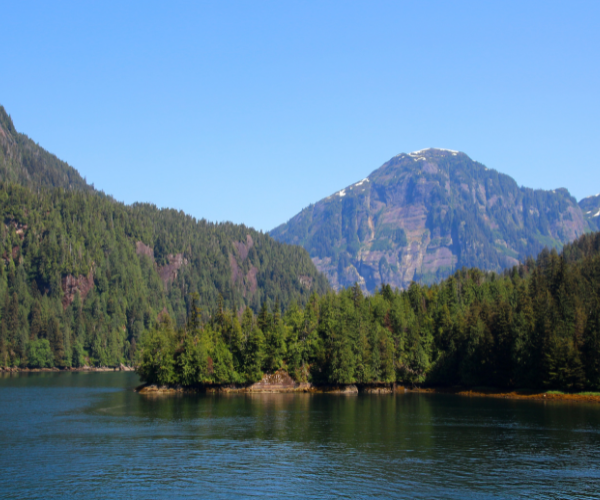
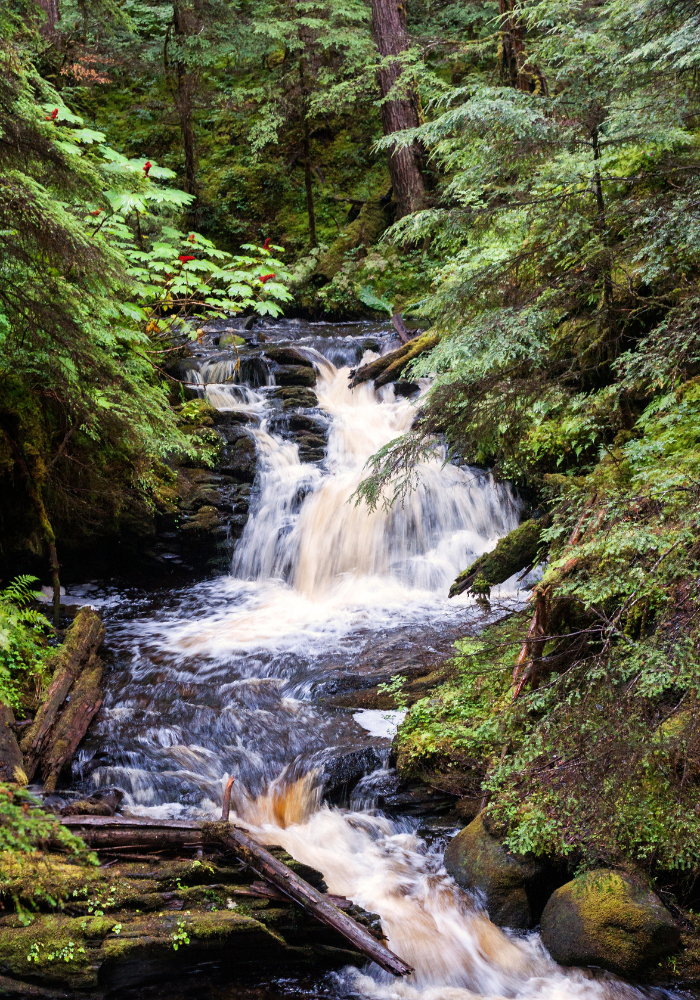
Instead of palm trees and hot, humid weather, this coastal rainforest is defined by towering evergreens, moss-covered forest floors, crystal-clear streams, and rugged mountains that seem to rise directly from the ocean. Frequent rainfall and a mild maritime climate create the perfect conditions for an incredibly diverse ecosystem that has flourished here for thousands of years.
The forest stretches across islands, fjords, glaciers, rivers, and thousands of miles of coastline, creating one of the most biologically rich environments in North America.
It’s also one of the few places where the line between land and sea feels almost invisible.
As you travel through Ketchikan, you’ll notice that everything seems connected. Waterfalls pour out of dense forests and into sheltered bays. Salmon streams wind through towering trees before emptying into the ocean. Eagles perch high above the shoreline while harbor seals wait patiently below.
It’s an ecosystem where every piece depends on another.
The Inside Passage: Nature's Highway
Running alongside the Tongass National Forest is one of Alaska’s greatest natural treasures—the Inside Passage.
This network of protected waterways stretches for hundreds of miles along the Pacific Coast, weaving between islands, mountains, and dense rainforest. For thousands of years, Indigenous communities traveled these waters by canoe, relying on the rich marine environment for food, transportation, and trade. Today, the Inside Passage remains one of the most scenic routes in North America and serves as the gateway to Southeast Alaska for millions of cruise passengers each year.
Unlike the open Pacific Ocean, much of the Inside Passage is naturally sheltered by hundreds of islands. These protected waters create calmer conditions that make exploring by boat one of the best ways to experience the region.
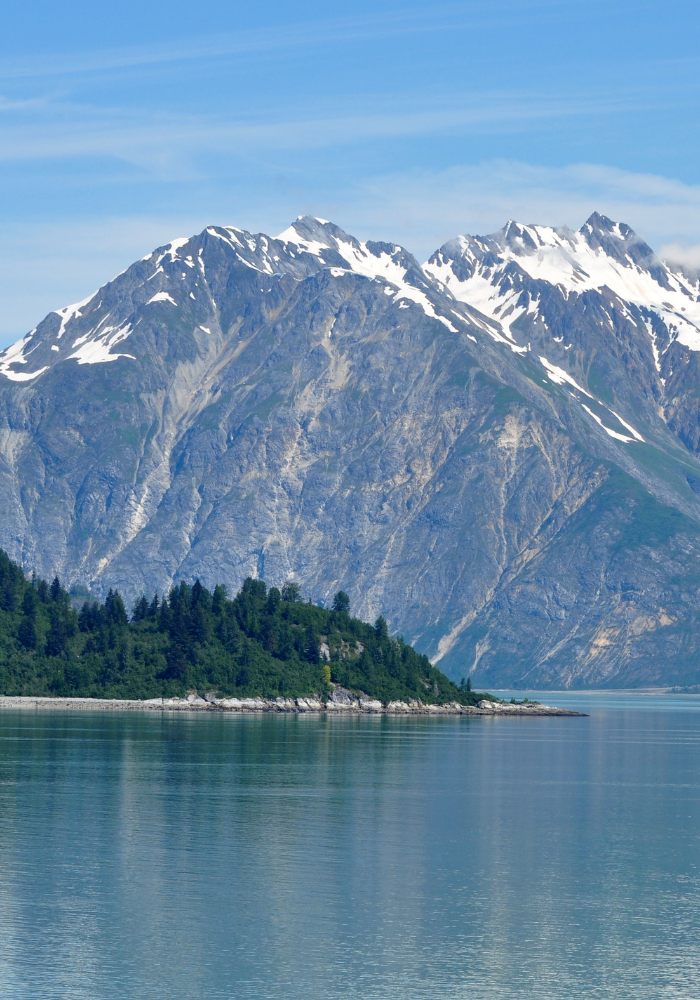
From the water, the scale of the Tongass becomes even more impressive. Waterfalls tumble down steep mountainsides, old-growth forests stretch to the shoreline, and wildlife appears where you least expect it. Every bend in the coastline reveals another postcard-worthy view, reminding visitors just how wild this part of Alaska still is.
Wildlife Flourishes Where the Forest Meets the Sea
One of the reasons so many visitors fall in love with Ketchikan is because wildlife isn’t confined to one area—it’s part of everyday life.
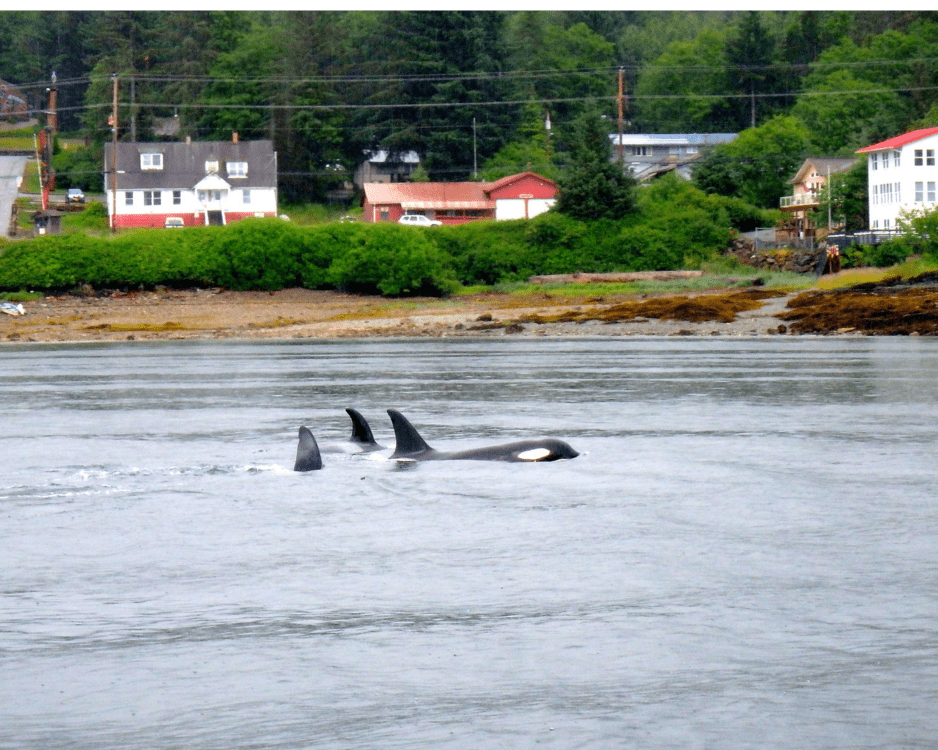
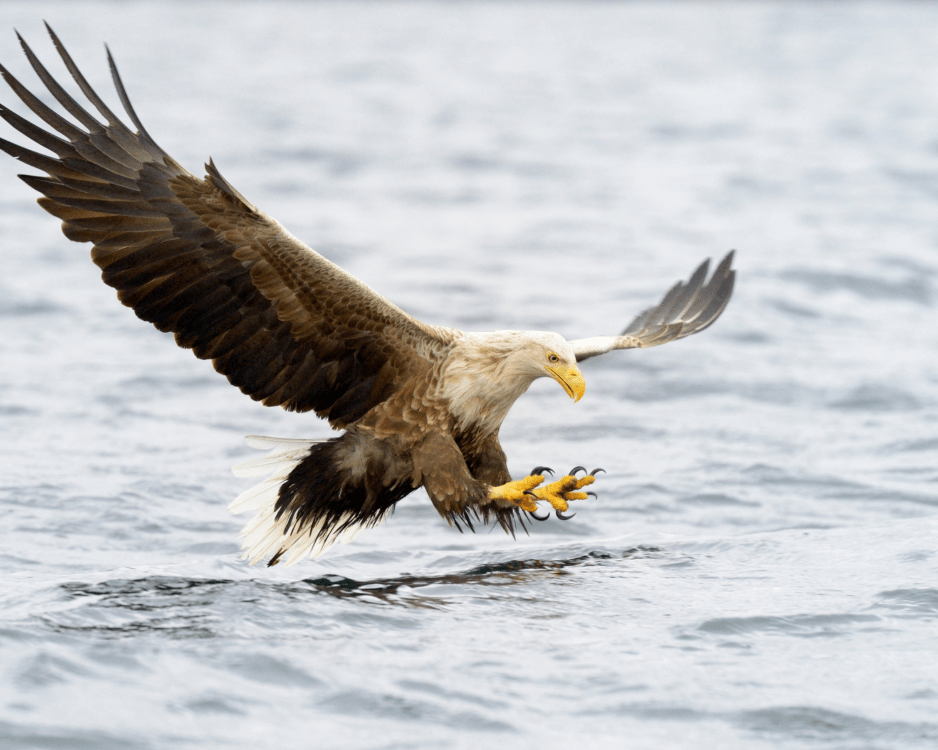
A bald eagle soaring overhead is an ordinary sight for locals, but an unforgettable moment for many visitors. Harbor seals frequently surface in quiet coves, while Steller sea lions gather on rocky outcroppings just offshore. During the summer months, humpback whales return to feed in the nutrient-rich waters surrounding the Inside Passage, often delighting guests with spectacular sightings.
Along the shoreline, black bears search for food near streams and tidal flats, while river otters dart between rocks and driftwood. Every outing is different, and that’s part of what makes Southeast Alaska so remarkable.
Unlike a zoo or wildlife park, nature doesn’t follow a schedule here.
Some days the whales steal the show.
Other days, it’s an eagle diving toward the water or a curious seal surfacing just a few yards from the boat.
That’s the beauty of exploring a place where nature is still very much in charge.
The Story of Salmon—and Why Everything Depends on Them
If there’s one species that connects the forest to the sea, it’s the Pacific salmon.
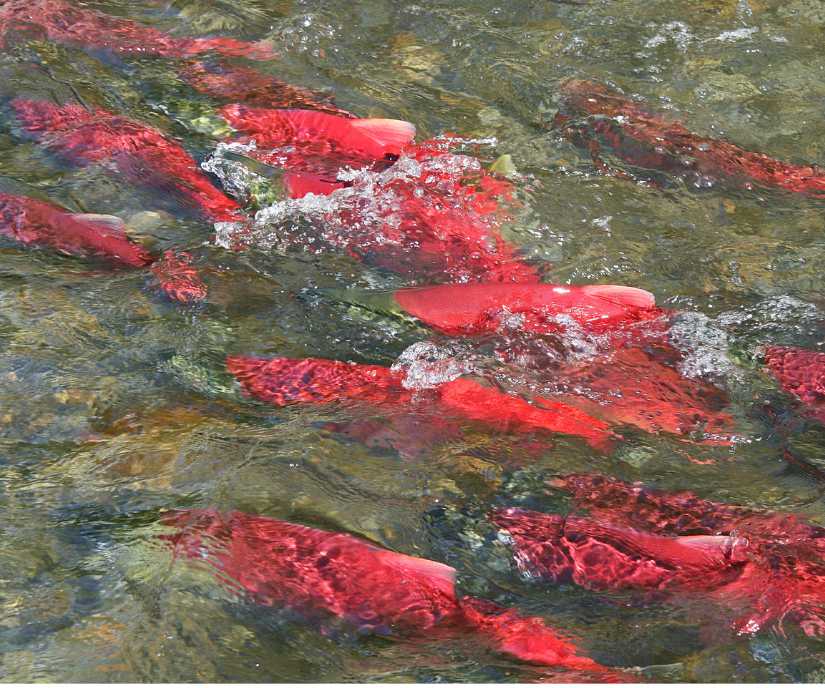
Every summer, millions of salmon return from the Pacific Ocean to the freshwater streams where they began their lives. Their migration is one of nature’s greatest spectacles, but it’s also one of the reasons the Tongass ecosystem remains so healthy.
Salmon provide food for bald eagles, black bears, seals, sea lions, whales, and countless other species. Even the forest benefits. Nutrients carried inland by spawning salmon eventually become part of the soil, helping nourish the very trees that shade the streams where the next generation of salmon will hatch.
It’s a cycle that has repeated itself for thousands of years, shaping both the landscape and the communities that call Southeast Alaska home.
Understanding this incredible connection helps explain why salmon are far more than just a popular sport fish.
They are the foundation of one of the world’s most remarkable ecosystems.
Learn more about How Salmon Shape Life in Southeast Alaska here.
Why Ketchikan Became the Salmon Capital of the World
When people hear Ketchikan referred to as the “Salmon Capital of the World,” they often assume it’s simply because the fishing is good.
The truth is, it goes much deeper than that.
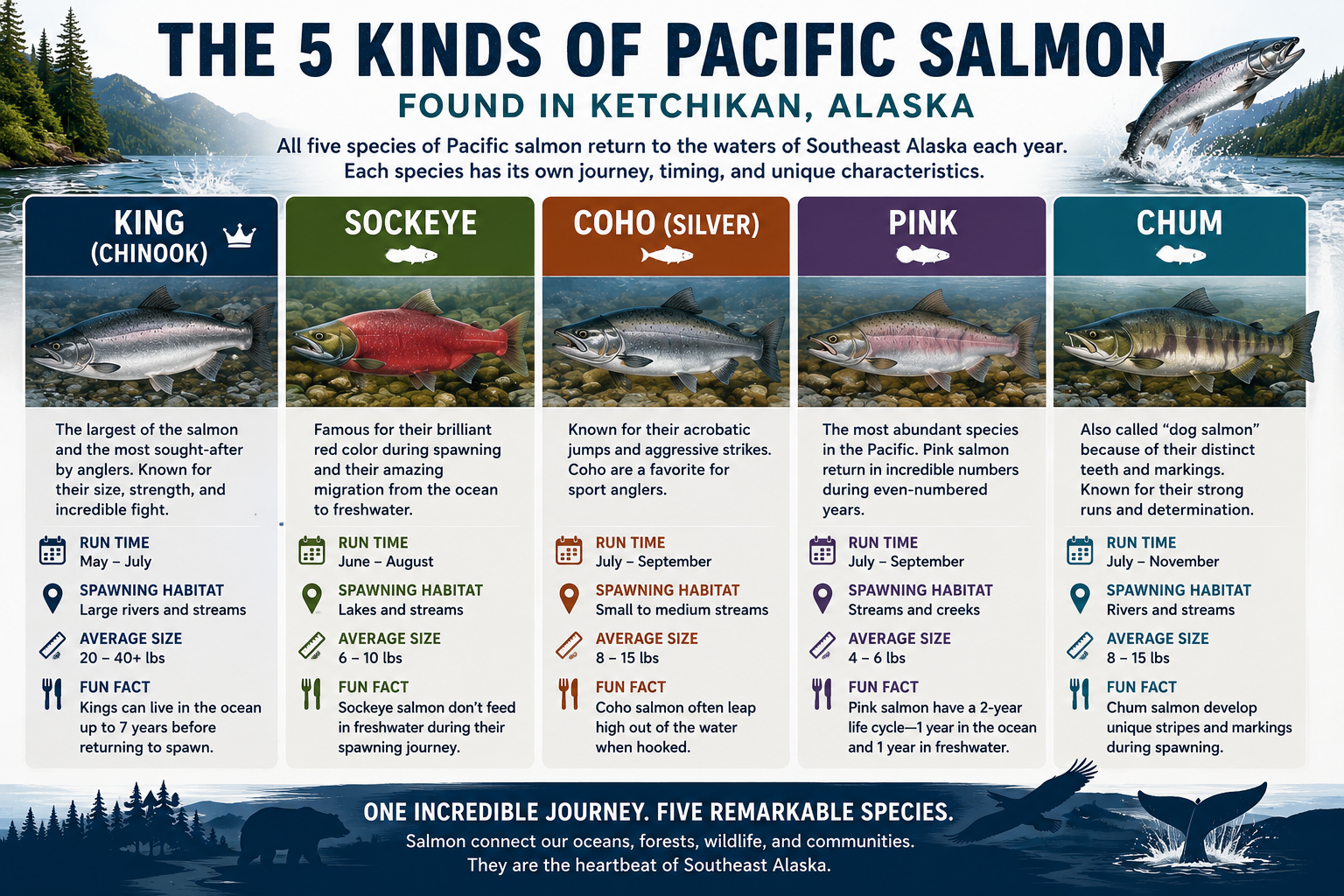
Ketchikan sits at the intersection of one of the healthiest marine ecosystems on the planet. The protected waters of the Inside Passage, countless freshwater streams flowing through the Tongass National Forest, and nutrient-rich Pacific waters create ideal conditions for all five species of Pacific salmon—king (Chinook), silver (coho), pink, chum, and sockeye.
Each summer, these incredible fish return from the open ocean to the streams where they were born, completing one of nature’s greatest migrations. Along the way, they support commercial fisheries, recreational anglers, local communities, Indigenous traditions, and nearly every major wildlife species found throughout Southeast Alaska.
It’s difficult to overstate just how important salmon are here.
They’re not simply part of the ecosystem.
They are one of the reasons the ecosystem thrives.
The Best Way to Experience the Tongass Is From the Water
You can certainly appreciate the Tongass from a hiking trail or while walking through downtown Ketchikan.
But there’s something entirely different about seeing it from the water.
As the shoreline slowly drifts past, you begin to understand just how vast this landscape really is. Dense rainforest stretches uninterrupted for miles, waterfalls tumble into quiet coves, and rocky shorelines give way to secluded beaches that can only be reached by boat.
It’s also where the wildlife feels closest.
One moment you’re watching a bald eagle perched high above the trees. The next, a harbor seal surfaces beside the boat or a humpback whale appears in the distance. Every trip is different, and that’s part of the experience.
For us, that’s one of the things we love most about spending our days on the water.
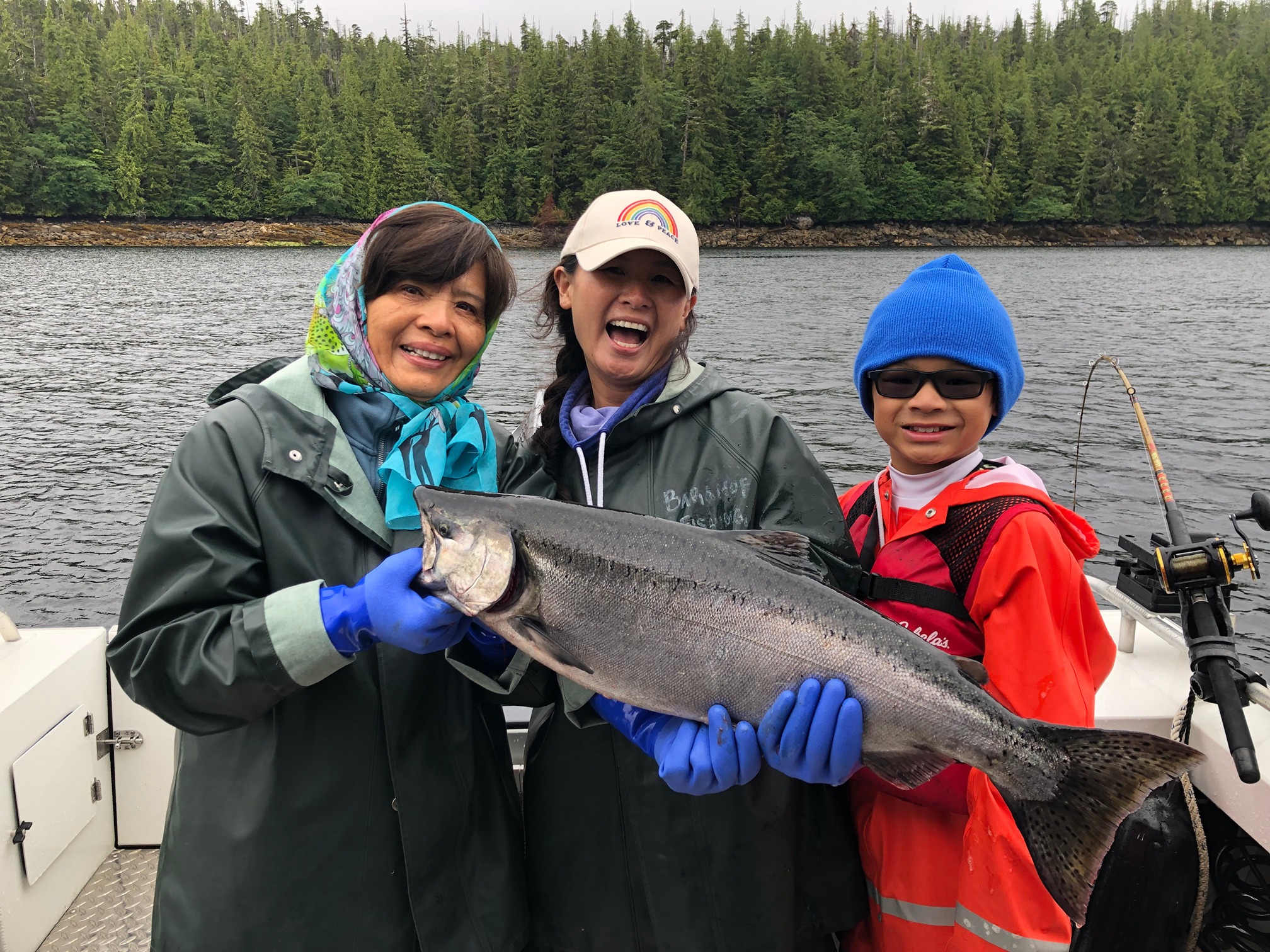
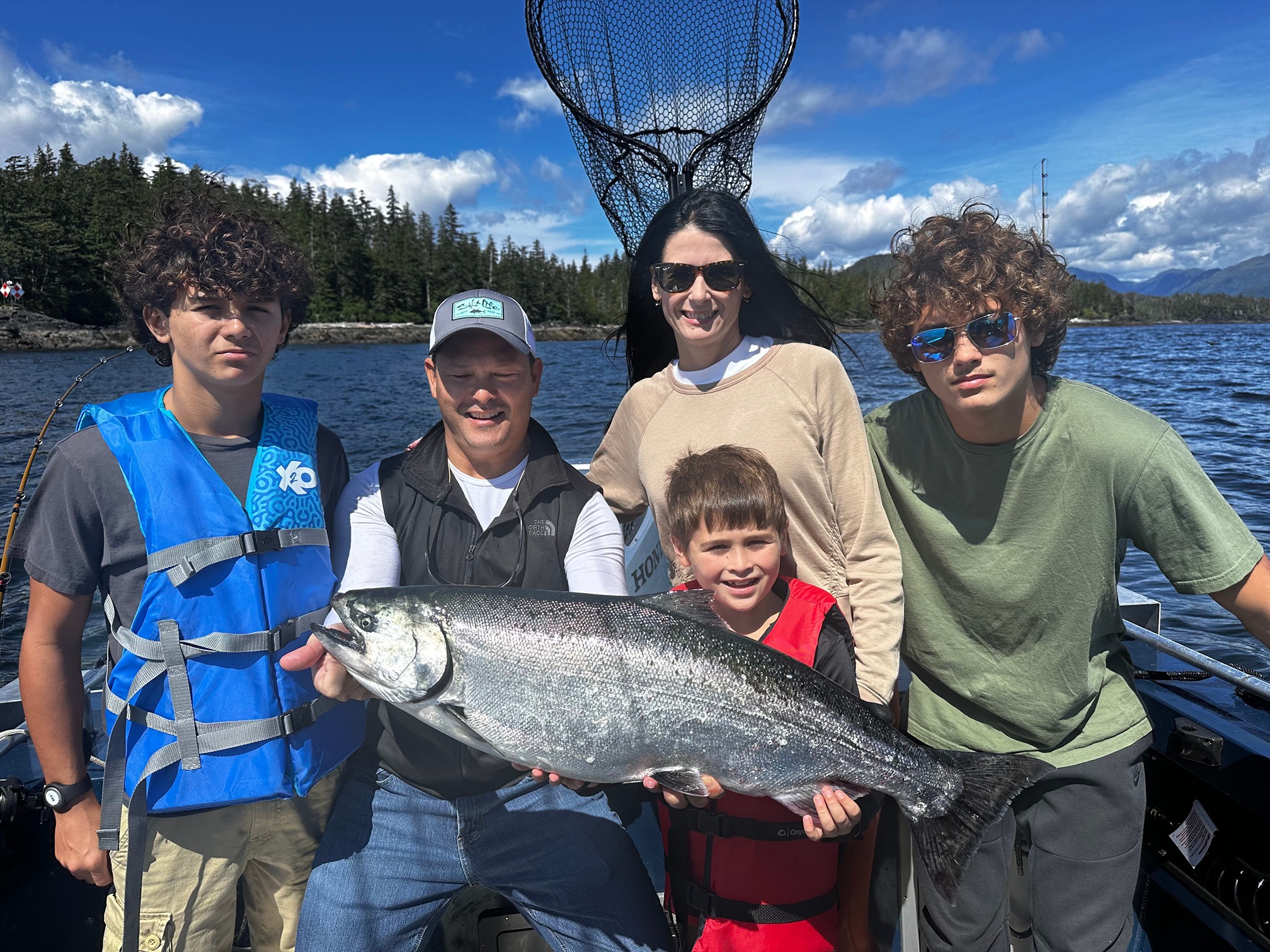
Fishing may bring many guests aboard, but by the end of the trip they’re often talking just as much about the scenery, wildlife, and incredible beauty surrounding them as they are about the fish they caught.
More Than a Fishing Destination
Ketchikan has earned its reputation as one of Alaska’s premier fishing destinations, but the experience goes far beyond casting a line.
It’s about watching clouds roll across forested mountains.
It’s about spotting a whale before anyone else on the boat notices.
It’s about understanding how salmon connect the forest, the rivers, and the ocean in ways few places on Earth still can.
Whether you’re visiting for a few hours during an Alaska cruise or spending several days exploring Southeast Alaska, taking time to experience the Tongass National Forest offers a deeper appreciation for everything that makes this region so extraordinary.
And if you happen to catch a wild Alaska salmon while you’re here, you’ll have experienced one of the most authentic traditions this remarkable place has to offer.
Frequently Asked Questions
What is the Tongass National Forest?
The Tongass National Forest is the largest national forest in the United States, covering nearly 17 million acres across Southeast Alaska. It’s one of the world’s largest remaining temperate rainforests and is home to diverse wildlife, old-growth forests, glaciers, rivers, and thousands of miles of coastline.
Why is the Tongass National Forest important?
The Tongass supports one of the richest ecosystems in North America. It provides habitat for bears, bald eagles, whales, salmon, and countless other species while also helping sustain the fisheries and communities that depend on healthy salmon runs.
What is the Inside Passage?
The Inside Passage is a network of protected waterways stretching along the coast of British Columbia and Southeast Alaska. Sheltered by hundreds of islands, it’s one of the most scenic cruising routes in the world and provides exceptional opportunities for wildlife viewing, fishing, and exploring Alaska by boat.
Why is Ketchikan called the Salmon Capital of the World?
Ketchikan’s location along the Inside Passage and its proximity to thousands of salmon streams make it one of the world’s premier salmon fishing destinations. Every summer, all five species of Pacific salmon return to the surrounding waters, supporting both wildlife and world-class recreational fishing.
What wildlife can you see around Ketchikan?
Depending on the season, visitors commonly see humpback whales, harbor seals, Steller sea lions, bald eagles, black bears, river otters, porpoises, and a wide variety of seabirds. Every outing is unique, but wildlife is abundant throughout Southeast Alaska.
Is the Tongass National Forest a rainforest?
Yes. The Tongass is a temperate rainforest, which means it receives abundant rainfall while maintaining cooler temperatures than tropical rainforests. The result is a lush landscape of towering evergreens, moss-covered forests, and crystal-clear streams.
What's the best way to experience the Tongass National Forest?
While hiking trails offer beautiful views, exploring by boat provides a unique perspective of the rainforest, coastline, waterfalls, and wildlife. Many visitors find that spending time on the water offers the most memorable way to experience Southeast Alaska.
Can I experience the Tongass National Forest during a cruise stop in Ketchikan?
Absolutely. Many cruise guests choose shore excursions that take them beyond downtown and onto the surrounding waterways, where they can experience the rainforest, wildlife, and scenic beauty that define Southeast Alaska.
Experience the Heart of Southeast Alaska
The Tongass National Forest isn’t just something you’ll see while visiting Ketchikan—it’s something you’ll experience.
From the towering forests and dramatic coastline to the wildlife and legendary salmon runs, nearly everything that makes Southeast Alaska unforgettable begins here.
If you’re looking for a deeper connection to this remarkable place, there’s no better way than spending time on the water. Whether you’re casting a line for wild Alaska salmon or simply taking in the scenery, exploring the Inside Passage offers a perspective of Ketchikan that few visitors ever forget.
It’s more than a fishing trip.
It’s a chance to experience one of the last truly wild places in North America.
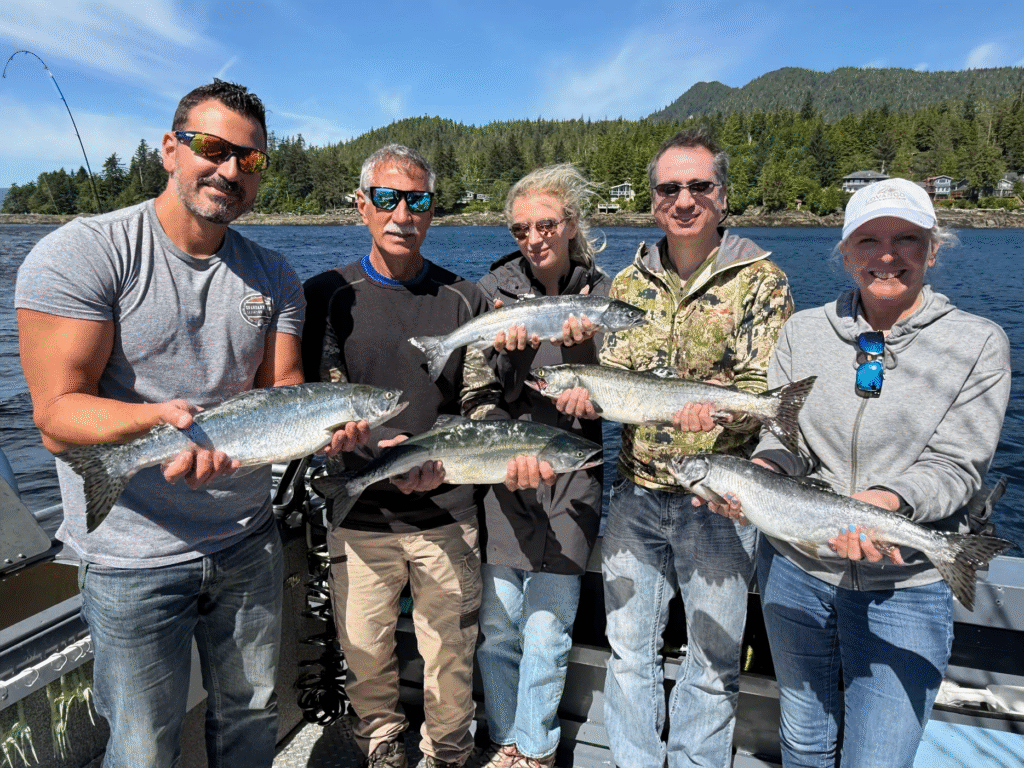
Ketchikan Fishing Company is Proudly Owned by Ketchikan's Finest Fishing Charters
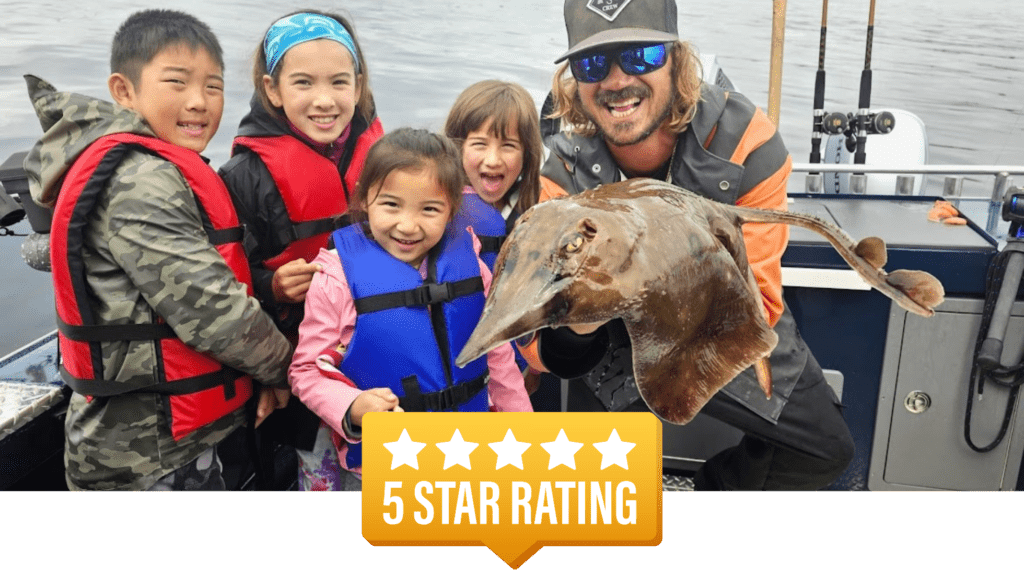
At Ketchikan Fishing Company, we are proud to be owned and operated by Ketchikan Wildlife Tours & Ketchikan Finest Fishing Charters —the #1 rated salmon and halibut fishing charter in Ketchikan. As a family-owned and locally operated business, we uphold the same commitment to excellence, safety, and customer satisfaction that has made us a trusted name in Ketchikan fishing excursions.
When you book a fishing charter with us, you’re choosing a locally trusted, cruise-friendly company that is dedicated to delivering an authentic Alaskan fishing experience.